
Quick Summary: Modern businesses rely on software to manage operations and stay competitive. However, off-the-shelf solutions often force process changes, create scaling limitations, and become expensive long-term. Custom software development provides a strategic advantage by aligning technology directly with business needs, workflows, and long-term goals. Instead of adjusting business processes to fit software, custom development ensures the software adapts to your business. This guide explores why custom solutions outperform ready-made software, who should consider it, and how to make the right investment decision.
Introduction
Modern businesses rely heavily on software to manage operations, serve customers, and stay competitive. However, many organizations struggle with software that does not fully match their workflows, forces unnecessary process changes, or becomes expensive to scale over time. Off-the-shelf software may seem like a quick fix, but it often creates limitations as businesses grow.
This is where custom software development becomes a strategic advantage. Based on real-world enterprise experiences, custom-built solutions are designed specifically for a company's needs, workflows, and long-term goals. Instead of adjusting business processes to fit software, custom development ensures the software adapts to the business.
What Is Custom Software Development?
Custom software development refers to the process of designing, building, and maintaining software tailored specifically to an organization's unique requirements. Unlike off-the-shelf software, which is designed for a broad audience, custom solutions are created to solve specific business challenges.
In practical terms, custom software aligns perfectly with internal workflows, integrates seamlessly with existing systems, and supports unique operational needs. Examples include custom CRMs, ERP systems, inventory management platforms, data analytics dashboards, and automation tools. Custom software is particularly valuable for businesses with specialized processes, regulatory requirements, or scalability needs.
It allows organizations to maintain full control over features, data, security, and future enhancements—something that generic software often cannot offer.
Why Custom Software Is Important for Modern Businesses
Today's business environment demands flexibility, speed, and innovation. Off-the-shelf solutions may offer convenience, but they often lack adaptability. Businesses are forced to compromise their workflows or pay for features they do not use.
Custom software provides a competitive advantage by aligning technology directly with business objectives. It eliminates inefficiencies, improves productivity, and supports long-term growth. Companies also gain better data ownership, stronger security controls, and the ability to adapt systems as market conditions change.
In industries such as finance, healthcare, logistics, and e-commerce, where processes are complex and compliance matters, custom software ensures operational accuracy while maintaining regulatory standards.
Key Advantages of Custom Software Development
Tailored to Business Needs: Custom software is designed specifically for an organization's workflows and objectives. Unlike generic tools, it includes only the features that matter, reducing complexity and improving usability for all users.
Scalability and Flexibility: As businesses grow, their software must evolve. Custom solutions can be easily scaled or modified to support new users, markets, or features without major disruptions or expensive migrations.
Better Integration: Custom software integrates smoothly with existing systems such as ERP, CRM, accounting, or data platforms. This eliminates data silos and improves operational efficiency across your entire organization.
Enhanced Security: Off-the-shelf software is a common target for cyberattacks because of its widespread use. Custom software allows organizations to implement tailored security measures and comply with industry-specific regulations more effectively.
Long-Term Cost Efficiency: While custom software may require higher initial investment, it often reduces long-term costs by eliminating licensing fees, unnecessary features, and inefficiencies caused by mismatched systems.
Benefits of Using Custom Software Over Off-the-Shelf Solutions
- Improved productivity: Streamlined workflows eliminate inefficiencies and manual workarounds required by generic software.
- Higher efficiency: Automation tailored to business operations reduces time spent on repetitive tasks.
- Reduced vendor dependency: Lower reliance on third-party vendors for support and updates gives you greater control.
- Better user experience: Custom interfaces designed for your employees and customers improve adoption and satisfaction.
- Competitive advantage: Unique functionality not available in generic software creates market differentiation.
- Full data ownership: Complete control over your data and software assets without licensing restrictions.
Custom Software vs Off-the-Shelf Solutions
When comparing custom and off-the-shelf software, several key factors emerge:
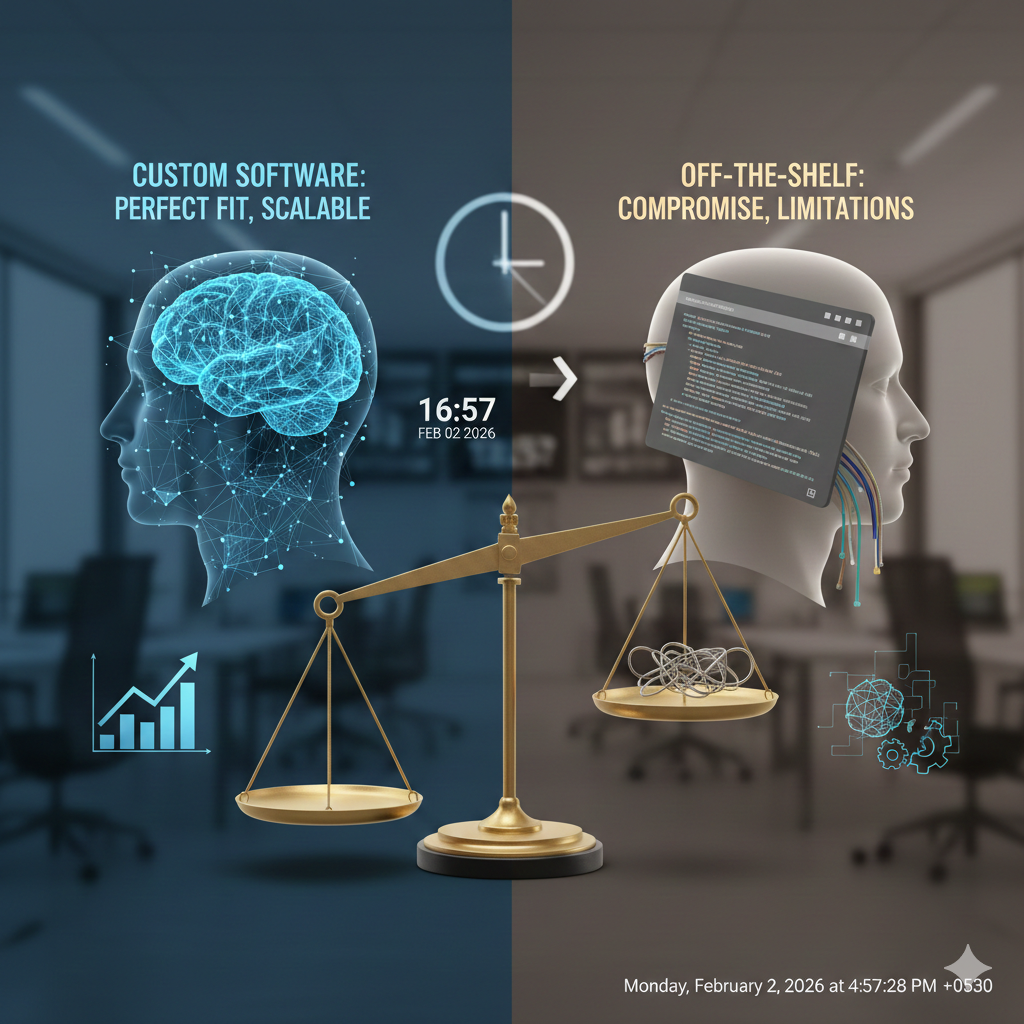
Flexibility: Custom solutions are fully customizable to your needs, while off-the-shelf software offers limited customization options that may not fit your processes.
Scalability: Custom software scales high as your business grows, whereas off-the-shelf solutions often have restricted scalability without expensive upgrades or migrations.
Long-Term Cost: Custom software proves cost-effective over time through eliminated licensing fees, while off-the-shelf solutions involve ongoing subscription and license costs.
Integration: Custom development enables seamless integration with existing systems, while off-the-shelf platforms often struggle with limited integration capabilities.
Security: Custom software offers tailored security measures matching your specific requirements, whereas off-the-shelf solutions provide generalized security that may not meet compliance needs.
Competitive Advantage: Custom solutions provide high competitive advantage through unique functionality, while off-the-shelf options offer low differentiation since competitors can use the same software.
How to Choose the Right Software Development Partner
Selecting the right development partner is critical for success. Businesses should look for teams with proven experience, strong technical expertise, and a clear understanding of business processes.
Key factors to consider include:
- Experience in similar industries: Proven track record in your business sector or industry vertical.
- Transparent development and pricing: Clear communication about costs, timelines, and deliverables from the start.
- Long-term support capability: Ability to provide ongoing maintenance, updates, and technical support after launch.
- Strong documentation and communication: Detailed documentation and regular communication ensure smooth project execution.
- Focus on security and scalability: Built-in security best practices and architecture designed for future growth.
A reliable partner acts as a technology advisor rather than just a developer, helping you make strategic decisions that benefit your business long-term.
Why Professional Custom Development Teams Are Trusted
Professional software development teams follow structured development methodologies, conduct proper testing, and ensure reliable deployment. They focus on delivering business value rather than just writing code.
Experienced teams also help clients avoid common mistakes such as poor requirement analysis, scalability issues, or weak security design. Their expertise ensures that software remains maintainable and adaptable as business needs evolve. At Applantics, we combine deep technical expertise with business acumen to deliver solutions that truly transform operations.
Real-World Use Cases
Custom software is widely used across industries to solve unique business challenges:
- Retail: Custom POS and inventory systems with real-time tracking and multi-branch management
- Healthcare: Patient management systems with secure data handling and regulatory compliance
- Logistics: Route optimization and tracking platforms that reduce delivery times and costs
- Finance: Risk analysis and reporting tools that provide competitive insights
- Service Businesses: CRM and workflow automation that improves customer engagement
- Manufacturing: Production planning and quality control systems that optimize operations
These use cases show how custom solutions solve real business problems more effectively than generic tools.
Frequently Asked Questions
Is custom software only for large companies?
No. Small and medium-sized businesses also benefit from custom software, especially when they need efficiency and scalability. Custom solutions can be scaled to fit any organization size and budget.
Is custom software expensive?
The initial cost may be higher than off-the-shelf solutions, but long-term savings often outweigh recurring licensing and customization fees. Custom software eliminates unnecessary features and licensing costs.
How long does development take?
Depending on complexity and scope, custom software projects can take from a few weeks for simpler solutions to several months for complex enterprise systems with extensive features.
Can custom software be updated later?
Yes. One of the main advantages of custom software is its flexibility for future upgrades, enhancements, and adaptations as business needs evolve and markets change.
Is custom software secure?
Yes. Security can be tailored specifically to meet your business and regulatory requirements. Custom software offers more control over security measures than generic off-the-shelf solutions.
Conclusion & Call to Action
Custom software development offers businesses greater control, flexibility, and long-term value compared to off-the-shelf solutions. By aligning technology with specific operational needs, organizations can improve efficiency, reduce costs, and gain a strong competitive edge.
For businesses aiming to grow, innovate, and future-proof their operations, investing in custom software is a strategic decision. The right development partner can help identify the right solution and turn business challenges into digital opportunities for sustainable success.
Ready to transform your business with custom software?
Action Items:
- Contact Applantics today for a free consultation about your custom software needs
- Review our portfolio to see custom solutions we've built for Sri Lankan businesses
- Schedule a strategy session to identify how custom software can drive your business growth
- Learn how we've helped 1,400+ organizations transform operations with tailored software
Visit our contact page or call +94 70 524 3021 to start your custom software development journey today.