
Introduction
In today’s world, many companies continue to depend upon old software systems developed years ago. Even if such systems continue to work well, they often find it difficult to meet today’s demands of accessibility from the cloud, integration with mobile devices, ensuring data security, and regulatory compliance. Eventually, old software systems become very costly to maintain.
From actual experiences in the industry, it has been observed that companies in Sri Lanka are experiencing system crashes, slow system operation, and limited reporting capabilities owing to outdated applications. More time is being spent on remedying the system than enhancing it. Decision-makers are not getting real-time information.
Legacy software modernization addresses these challenges by upgrading, reengineering, or replacing outdated systems with modern, scalable solutions. This article is written for business owners, IT managers, and decision-makers who want to understand when and why legacy software modernization is necessary, what benefits it delivers, and how to choose the right technology partner—without unnecessary technical jargon or sales hype.
What Is Legacy Software Modernization?
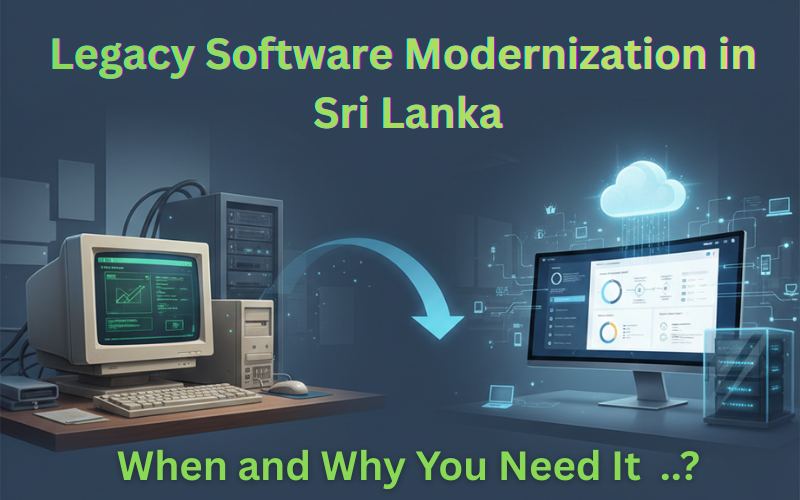
Legacy software modernization is the process of transforming outdated software systems into modern, efficient, and secure applications that align with current business needs. A legacy system is typically built on old programming languages, outdated databases, or obsolete infrastructure that is no longer supported or easily scalable.
In real-world scenarios, modernization may involve:
- Migrating a desktop-based system to a cloud-based platform
- Rewriting an old application using modern frameworks
- Integrating legacy systems with mobile apps or APIs
- Improving performance, security, and user experience
Modernization does not always mean replacing everything. In many cases, critical business logic is preserved while the underlying technology is upgraded. This reduces risk and ensures continuity.
Businesses that benefit most from legacy software modernization include:
- Companies relying on manual or semi-automated processes
- Organizations experiencing system downtime or slow performance
- Businesses expanding to multiple branches or online platforms
- Enterprises facing security, compliance, or data integrity concerns
Industries such as retail, healthcare, finance, logistics, and hospitality commonly modernize legacy systems to remain competitive and compliant in a digital-first economy.
Why Legacy Software Modernization Is Important for Businesses in Sri Lanka
Sri Lankan companies find themselves in a rapidly changing environment that is characterized by a need for speed, efficiency, and ease of access. At the same time, companies have been faced with increasingly changing rules and regulations with regard to taxation, financial reporting, and protection of data.
However, despite such developments, many of these local businesses continue to use systems designed and developed for a vastly different environment. Some of the common issues associated with such systems include:
- On-premise desktop applications that can only be accessed from a single location, limiting flexibility and collaboration
- Unsupported databases or operating systems, increasing the risk of system failures and security vulnerabilities
- Limited integration capabilities, making it difficult to connect with payment gateways, mobile apps, accounting systems, or cloud platforms
These constraints directly affect day-to-day operations. For instance, a retail business using an outdated POS system may struggle to track inventory across multiple branches, leading to stock shortages or excess inventory. A service-based company may experience delays in invoicing or reporting because data is scattered across disconnected systems. Over time, these inefficiencies increase operational costs and reduce customer satisfaction.
Legacy software modernization helps Sri Lankan businesses overcome these limitations by introducing modern, scalable, and secure systems that align with current business needs. Key benefits include:
- Reduced long-term IT maintenance costs by eliminating dependency on obsolete hardware and unsupported software
- Improved system availability and performance, minimizing downtime and operational disruptions
- Support for remote work and mobile access, enabling teams to work efficiently from multiple locations
- Stronger data security and reliable backup mechanisms, reducing the risk of data loss and cyber threats
In addition, modernization allows organizations to react quicker to market changes, implement new payment solutions such as digital payment solutions, and get greater visibility into business processes through real-time reporting and analytics solutions.
With the increasing risks of cyber threats, customer expectations, and digital transformation initiatives in Sri Lanka, software modernization has become a critical business decision that goes beyond a simple IT upgrade for organizations in this country.
Key Features to Look For in a Legacy Software Modernization Service
System Assessment & Architecture PlanningA professional modernization service begins with a detailed analysis of the existing system. This includes identifying technical debt, performance bottlenecks, and business-critical components that must be preserved.
Cloud & Mobile CompatibilityModern systems should support cloud deployment and mobile access. This ensures scalability, remote accessibility, and easier maintenance without heavy infrastructure costs.
Security & Data ProtectionLegacy systems often lack modern security controls. A good modernization solution includes data encryption, role-based access, secure authentication, and compliance-ready data handling.
Integration CapabilitiesModernized software should easily integrate with third-party systems such as payment gateways, ERP tools, accounting software, and analytics platforms through APIs.
Customization & ScalabilityEvery business operates differently. The system should be customizable and scalable to support future growth, new branches, or additional services.
Local Support & TrainingAccess to local technical support, documentation, and staff training is critical for smooth adoption and long-term success.
Benefits of Using a Professional Legacy Software Modernization Service
Legacy software modernization is more than a technical upgrade; it provides clear and measurable business value when carried out by experienced professionals. The modernization process ensures that systems are upgraded with little or no impact on the day-to-day business operations and that technology is aligned with the future vision of the business.
Operational BenefitsProfessional modernization significantly improves how systems perform and how teams work. Modern platforms are optimized for speed, reliability, and automation, reducing the burden on staff and IT teams.
- Faster system performance through optimized architectures and modern databases, enabling quicker transactions and reporting
- Reduced downtime and system errors, minimizing operational disruptions and lost productivity
- Streamlined workflows and automation, eliminating manual tasks and improving consistency across processes
- Improved system stability, ensuring critical business functions run smoothly even during peak usage
These improvements allow employees to focus on value-driven work rather than troubleshooting system issues.
Financial BenefitsLegacy systems often come with hidden costs, including frequent fixes, outdated hardware, and reliance on specialized technical support. Professional modernization helps control and reduce these expenses.
- Lower maintenance and infrastructure costs by moving away from obsolete hardware and unsupported software
- Better resource utilization, ensuring systems scale efficiently without unnecessary overhead
- Improved return on investment (ROI) by extending the life of existing systems while enhancing their capabilities
- Predictable IT spending, reducing unexpected repair or downtime-related costs
Over time, modernized systems provide greater financial stability and cost transparency.
Customer Experience ImprovementsCustomer expectations continue to rise, and outdated systems often struggle to keep up. Modernized software supports faster, more reliable, and more consistent service delivery.
- Faster service delivery, reducing wait times and improving overall satisfaction
- Accurate and real-time data, ensuring correct billing, inventory availability, and reporting
- Improved reliability and trust, as customers experience fewer errors or service interruptions
- Consistent experiences across channels, whether in-store, online, or mobile
A better customer experience directly contributes to stronger brand reputation and retention.
Scalability and Future ReadinessOne of the most important advantages of professional modernization is preparing the business for future growth and change.
- Easy expansion to new locations or branches without system redesign
- Support for mobile, web, and cloud-based channels, enabling digital transformation initiatives
- Flexibility to integrate new tools and technologies, such as analytics or AI-driven features
- Long-term technology sustainability, reducing the risk of sudden obsolescence
With professional guidance, modernization ensures systems are not just updated for today, but ready for tomorrow’s business challenges.
Customized vs Ready-Made Modernization Solutions
Ready-made solutions are faster to deploy and often cost-effective for standard business needs. However, they may not fully address unique workflows or integration requirements.
Customized modernization solutions offer:
- Tailored functionality
- Better alignment with business processes
- Greater flexibility and scalability
Businesses with complex operations, multiple integrations, or industry-specific requirements benefit more from customized solutions, while smaller organizations may prefer ready-made options for simplicity.
How to Choose the Right Legacy Software Modernization Partner
Selecting the right provider is as important as the technology itself. Consider the following factors:
- Proven experience in legacy systems and modern technologies
- Portfolio of real projects across industries
- Local support availability for faster response
- Transparent pricing and clear contracts
- Post-launch support and maintenance services
A trustworthy partner focuses on long-term success, not just initial delivery.
Why Applantics Is a Trusted Choice
Applantics is a Sri Lanka-based software solution vendor with rich experience in modern application development and system transformation. It is an expert in modernizing legacy systems into secure, scalable, and user-friendly modern applications.
The clients of Applantics come from the retail, service, education, and corporate segments. The company’s team knows the challenges and requirements of the local businesses and thus provides solutions instead of just implementing technical improvements.
Key strengths include:
- Expertise in modern web, mobile, and cloud technologies
- Customized modernization strategies
- Strong post-deployment support
- Transparent communication and client collaboration
Real-World Use Cases / Industries Served
Legacy software modernization is widely used across industries such as:
- Retail & Supermarkets – POS modernization, inventory automation
- Restaurants & Hospitality – Order management and reporting systems
- Pharmacies & Healthcare – Secure data handling and compliance
- Service Businesses – CRM and billing system upgrades
These use cases demonstrate practical, measurable improvements in efficiency and reliability.
FAQs
- Is legacy software modernization suitable for small businesses?
Yes. Small businesses benefit by reducing manual work, improving reliability, and preparing for growth without replacing everything at once. - Can existing data be preserved during modernization?
Absolutely. Professional modernization includes secure data migration and validation. - Is cloud or offline mode available?
Modern systems can support cloud, offline, or hybrid models based on business needs. - How long does modernization take?
Timelines vary based on system complexity, but phased approaches minimize disruption. - What kind of support is provided after launch?
Ongoing maintenance, updates, security monitoring, and user support are typically included.
Conclusion & Call to Action
Old software can really drag a business down in all sorts of ways. It is not just some tech thing, but more about getting your company to run smoother and safer these days. You know, in this digital world where everything moves fast, outdated systems kind of slow down growth and make risks go up, plus they stop new ideas from coming in.
I think modernizing it makes sense if you pick the right moment and team up with someone who knows what they are doing. That way, you keep what you already put money into, and open up fresh chances too. If the software you have now feels like it is holding things back, maybe it is time to look into changing it up a bit.
Businesses should reach out to Applantics for a talk or check on the system. It could be the start to building something that works for the future. That part about protecting investments while trying new stuff, it seems important, even if I am not totally sure how every company handles it.